
For example, with asymmetric encryption, when an e-mail is encrypted using a public key, it could only be decrypted by the recipient with the corresponding non-public key. Alternatively, when someone signs a document with their personal key, solely the corresponding public key can be utilized for signature verification/authenticity. As we’ve simply seen, generating new keys for each encryption is difficult and expensive.
We can see that the one-time pad with key reuse is insecure because Eve has learned one thing about the original messages (namely, the XOR of the 2 authentic messages). In almost all practical cryptosystems, we enable ciphertexts to leak the length of the plaintext. If we want a scheme that doesn’t reveal the length of the plaintext, then we would need each ciphertext to be the same length.
If the ciphertext is all the time \(n\) bits long, then we wouldn’t have the power to encrypt any messages longer than \(n\) bits, which makes for a very impractical system. You may make \(n\) very giant to find a way to encrypt most messages, but this would mean encrypting a one-bit message requires an enormous \(n\)-bit ciphertext. Either means, such a system can be very impractical in actual life, so we permit cryptosystems to leak the length of the plaintext. In summary, our definition of confidentiality says that even when Eve can trick Alice into encrypting some messages, she nonetheless can not distinguish whether Alice sent \(M_0\) or \(M_1\) within the experiment.
- This developer guide covers three important use cases—session keys, self-use keys, and pre-shared keys—with sensible methods for secure technology, rotation, and storage.
- Encryption for any lively session is completed through symmetric encryption and is an integral a half of web site safety.
- Whereas the ephemeral approach presents the best security, it comes with limitations.
- By following these practices, you’ll build sturdy techniques that leverage symmetric cryptography’s efficiency advantages whereas sustaining strong safety postures all through the key lifecycle.
- For example, with asymmetric encryption, when an email is encrypted utilizing a public key, it could possibly only be decrypted by the recipient with the corresponding non-public key.
The Means To Measure Time To Revoke For Uncovered Credentials
Notice that in CTR and OFB modes, the decryption algorithm makes use of the block cipher encryption function instead of the decryption function. Intuitively, it is because Alice used the encryption perform to generate a one-time pad, so Bob also wants to use the encryption perform to generate the identical pad. The plaintext is never https://sustainablefamilyfinances.com/2015/04/the-basics-of-home-security.html passed via the block cipher encryption, so the block cipher decryption is never used.
Asymmetric-key Algorithms
Its software-based implementation usually outperforms AES on devices without devoted cryptographic hardware. Just just like the keys to your home, great emphasis should be positioned on maintaining and securing cryptographic keys. Asymmetric-key algorithms and symmetric-key algorithms are primary forms of cryptography. This article delineates the details of symmetric encryption and throws light on the benefits and challenges. Unprotected keys and inconsistent signing policies put your software supply chain at risk. AppViewX Code Signing secures keys in FIPS-certified HSMs, enforces constant signing policies throughout your CI/CD pipeline, and gives safety and DevOps full visibility into each signing occasion.
Ema Report: Ssl/tls Certificates Security-management And Expiration Challenges

So there would be no level in such an encryption process the place the keys usually are not secure. What if we just XOR the primary 100 bits of the earlier ciphertext with the 100 bits of plaintext, and ignore the final 28 bits of the previous ciphertext? Now we now have a 100-bit input to the block cipher, which only takes 128-bit inputs. Knowing the variations, similarities, and particulars of every will assist information your security plan finest practices and hold your workforce secure. An encryption algorithm — sometimes referred to as a cipher — establishes a mathematical set of rules that define how the key alters the information.
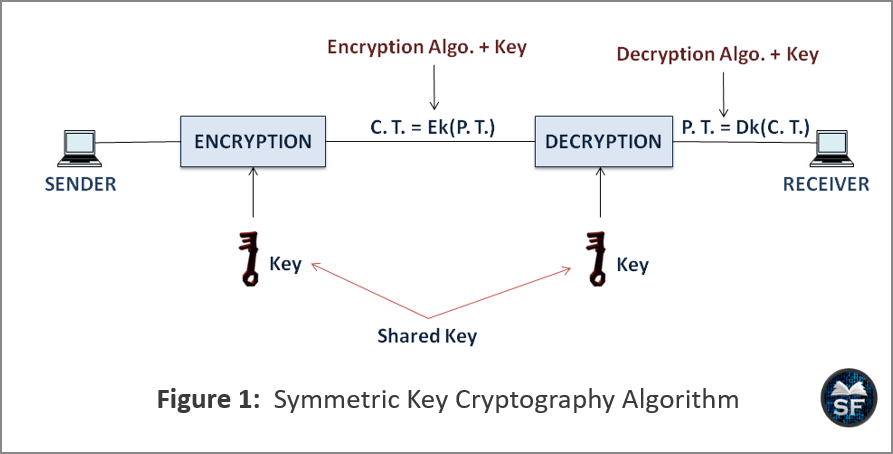
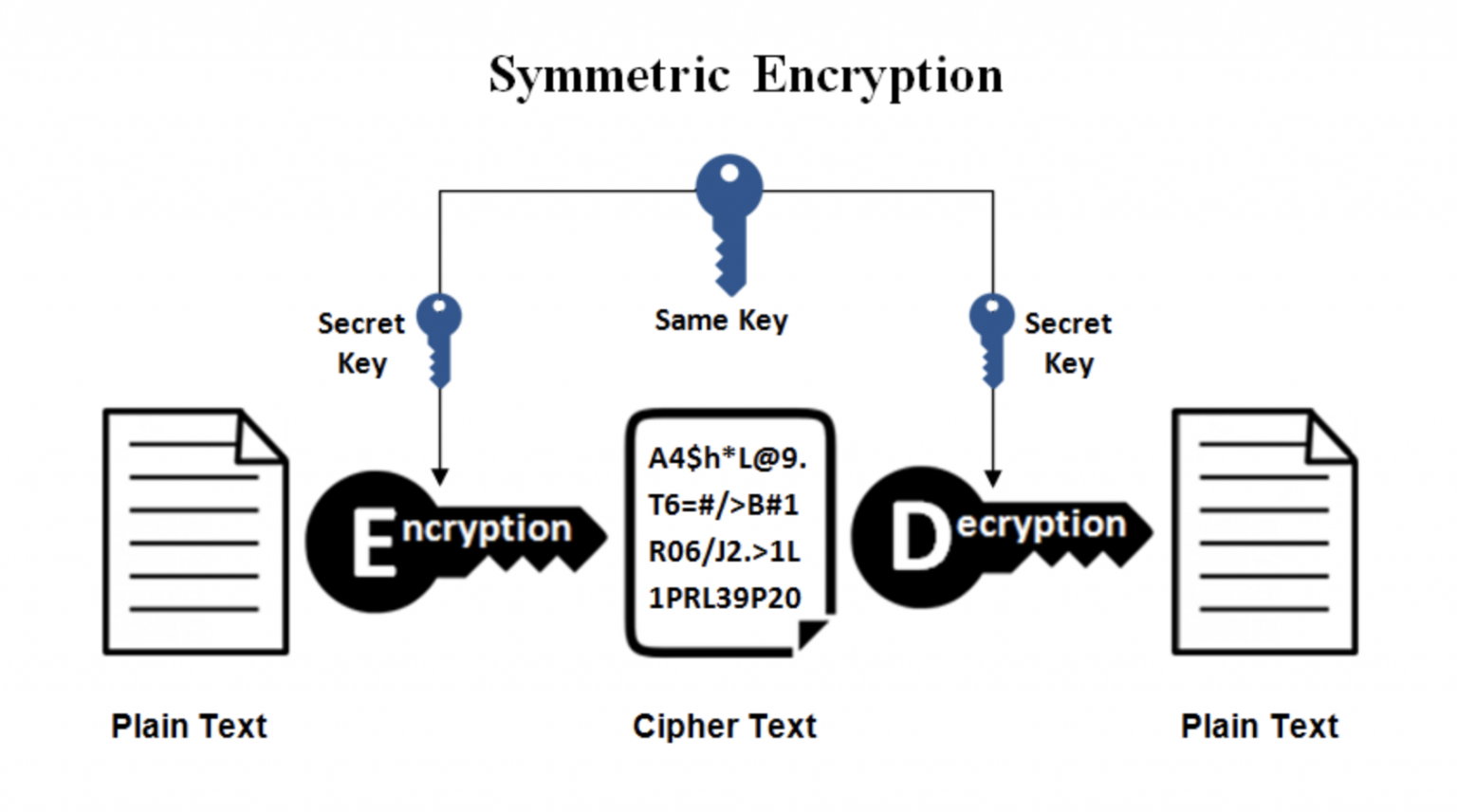
Anyone could intercept the encrypted message, however only the receiver can decrypt it. In symmetric encryption, the sender makes use of a shared secret key to convert plaintext (original data) into ciphertext (encrypted data). The receiver, who also possesses the identical secret key, then uses it to decrypt the ciphertext again into readable plaintext.
Start Your Journey To Secrets-free Source Code
Encrypting the identical plaintext twice at all times ends in the same output, and this causes data leakage. We have already reasoned that block ciphers allow us to encrypt messages which are longer than one block lengthy. What occurs if we wish to ship a message that is not a multiple of the block size? For this part, assume that the block measurement is 128 bits, or 16 bytes (16 characters). Observe that every block cipher solely takes the nonce and counter as input, and there’s no reliance on any earlier ciphertext or plaintext.
The primary benefit of symmetric encryption over different ciphering methods is its agility and efficiency for safeguarding an unlimited amount of delicate information. The symmetric algorithms present a greater degree of security and the sheer simplicity is also a logical benefit since there is a lesser need for processing powers. In Contrast To https://www.cacainadjourney.com/2011/07/finding-right-security-system.html the DES, this tactic deploys two to a few keys, enabling the algorithm to have a quantity of rounds of encryption and decryption processes. Triple Knowledge Encryption Commonplace algorithm is rather more safe than its predecessor- DES. In symmetric encryption, each the sending and receiving units have an analogous key, which is saved a secret.
The two primary makes use of of asymmetric-key algorithms are public-key encryption and digital signatures. Public-key encryption is a technique the place anyone can send an encrypted message within a trusted network of users. The sender encrypts the message utilizing the receiver’s public key, allowing only the receiver to decrypt the message using his or her own personal key.